The Torres Split Decision: Why Ripple's XRP Sales Had Two Legal Outcomes
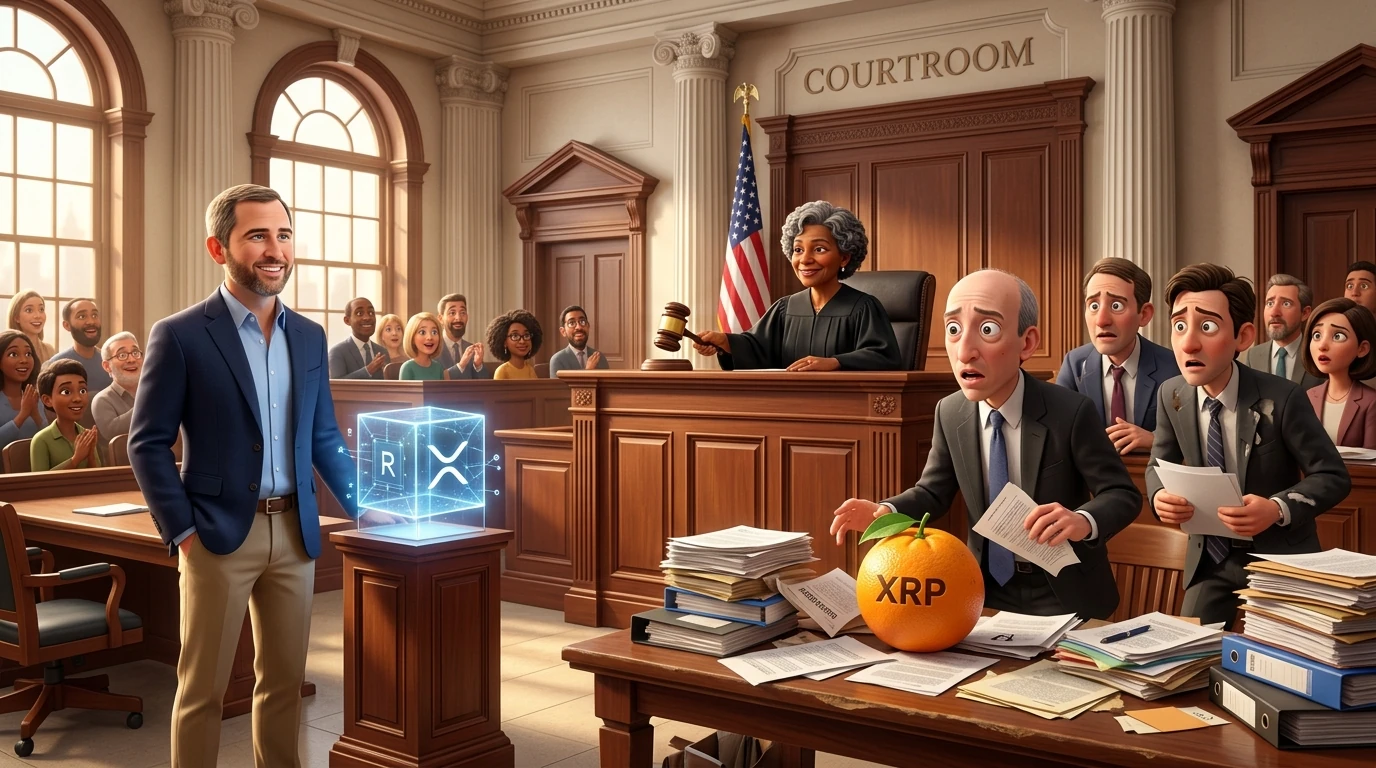
The SEC sued Ripple in 2020 over more than $1.3 billion in alleged unregistered XRP sales. Judge Analisa Torres later ruled that Ripple's institutional sales were investment contracts, while its programmatic sales did not satisfy Howey; the $125 million final judgment remained after both sides dismissed their appeals in 2025.
Key Points
- The SEC’s December 22, 2020 civil action alleged more than $1.3 billion in unregistered XRP sales; Coinbase suspended trading on January 19, 2021.
- Ripple challenged the allegations, but Torres rejected the fair-notice defense for institutional sales and did not decide it for the other transactions.
- The mixed ruling distinguished institutional from programmatic sales. A $125,035,150 civil penalty and injunction survived the dismissal of both appeals in 2025.
Chronological Timeline
The SEC alleges that XRP sales beginning in 2013 raised more than $1.3 billion in an unregistered offering.
Coinbase suspends XRP trading on January 19 while keeping account balances and permitting XRP deposits and transfers to outside wallets.
Institutional sales are investment contracts; Ripple’s programmatic sales do not satisfy Howey on this record.
An October 19 stipulation dismisses the civil aiding-and-abetting claims concerning institutional sales with prejudice, preventing their reassertion.
The SEC and Ripple dismiss their appeals, leaving the $125,035,150 penalty and injunction from the 2024 final judgment in effect.
A lawsuit reaches the trading screen
On December 22, 2020, the SEC sued Ripple Labs, Brad Garlinghouse and Chris Larsen in federal court in Manhattan. It alleged that sales beginning in 2013 had raised more than $1.3 billion through an unregistered securities offering. The agency sought injunctions, disgorgement and civil penalties. These were allegations in a civil enforcement action, not criminal charges or a finding that every XRP buyer had broken the law.[3]
For a holder, the dispute became tangible at the exchange. Coinbase suspended XRP trading on January 19, 2021. Its notice distinguished trading from custody: balances remained in accounts, and users could still deposit XRP or send it to an outside wallet. Losing a venue for selling was consequential, but it was not the same event as losing ownership of a token or having the blockchain stop.[6]
Garlinghouse publicly rejected the SEC’s position. In a December 23 statement, he described the case as an attack on the wider crypto industry and said he and Larsen would fight rather than settle separately. That was Ripple’s account of its stakes and intentions. It explained the company’s resistance; it did not establish regulatory misconduct or predict what a court would ultimately accept.[2]
The SEC is completely wrong on the facts and law and we are confident we will ultimately prevail before a neutral fact-finder.[2]— Andrew Ceresney, Ripple outside counsel
Why an orange grove mattered to XRP
The legal bridge to XRP ran through a Florida citrus grove. In SEC v. W.J. Howey Co. in 1946, the Supreme Court examined land offered together with cultivation and profit-sharing arrangements. An investment contract could exist when people put money into a common enterprise expecting profits from others’ efforts. The substance of the arrangement mattered more than the label attached to the property.[1]
That distinction gave the Ripple dispute its shape. The July 2023 order explained that an ordinary asset could be sold through an investment contract. A token’s currency or commodity features did not settle the legal character of every sale. Rather than finding a permanent contract inside XRP’s code, the court examined the contracts, expectations and circumstances surrounding the defendants’ different transactions.[4]
Ripple’s public response emphasized that buying XRP did not give holders shares, dividends or voting rights in the company. The court’s task was broader than checking whether XRP was stock. It had to apply Howey to the actual offers and sales. An asset could have uses beyond a company while a particular arrangement for selling it still satisfied the investment-contract test.[2][4]
The defendants also argued that they lacked fair notice of what the law prohibited; Larsen and Garlinghouse raised a related vagueness defense. For institutional sales, Torres rejected those defenses, finding that Howey and its case law provided constitutionally sufficient guidance. She did not decide the fair-notice defense for the other transactions. Ripple’s success elsewhere in the order therefore was not a constitutional victory on this argument.[4]
One token, different transactions
On July 13, 2023, Judge Analisa Torres issued a 34-page summary-judgment order. Its central move was to separate transactions involving the same token. That approach meant neither side could compress the result into a single verdict about XRP everywhere. The record supporting a negotiated sale to an institutional buyer was different from the record supporting Ripple’s sales through exchange order books.[4]
Ripple’s institutional sales under written contracts, totaling $728 million, were unregistered offers and sales of investment contracts. The court found that those buyers reasonably expected Ripple to use the money to develop the XRP ecosystem and increase XRP’s price. This was an adverse ruling for Ripple under Section 5, even though other parts of the decision favored the company.[4]
For Ripple’s programmatic sales through exchanges, buyers in blind bid-ask transactions did not know whether their money went to Ripple or another seller. The undisputed record did not establish Howey’s third requirement for that category. Footnote 16 expressly left secondary-market sales generally undecided: their treatment would depend on the circumstances of each transaction. An anonymous order book was not declared a universal exemption.[4]
For the foregoing reasons, the SEC's motion for summary judgment is GRANTED as to the Institutional Sales, and otherwise DENIED. Defendants' motion for summary judgment is GRANTED as to the Programmatic Sales, the Other Distributions, and Larsen's and Garlinghouse's sales, and DENIED as to the Institutional Sales.[4]— Judge Analisa Torres
Trading returns; the judgment remains
The return of exchange access followed separate timetables. Coinbase’s notice records XRP’s relisting on July 13, 2023. Gemini’s announcement of support is dated August 10 and was updated August 16. Those notices document platform decisions, not a court guarantee covering every trade. They cannot be combined into a story in which all exchanges restored XRP within hours of the judgment.[6][7]
The case also continued beyond July. The court’s later procedural account records the rejection of the SEC’s interlocutory-appeal request on October 3, 2023. A stipulation dated October 19 dismissed, with prejudice, the remaining civil claims that Garlinghouse and Larsen aided and abetted Ripple’s institutional-sales violations. Those claims could not be brought again, and their scheduled trial was no longer needed. Remedies against Ripple remained to be decided.[8][9]
On August 7, 2024, the court entered final judgment, imposed a $125,035,150 civil penalty, and enjoined Ripple from further Section 5 violations. On August 7, 2025, the SEC and Ripple jointly dismissed their appeals, so that judgment remained in effect. Ending the appeals did not erase the institutional-sales finding, cancel the penalty or lift the injunction.[8][5]
The lasting tension is between a token that moves unchanged and sales whose legal circumstances differ. Ripple prevailed on programmatic sales; the SEC prevailed on institutional sales. Reading both halves explains why trading could return while a substantial civil judgment remained. The result offers a method for reading the evidence around a transaction, not a promise that a familiar ticker determines its legal status.[4][5]
Key Takeaways for Investors & Builders
Examine the transaction around the token
A digital token's treatment under Howey can depend on the economic reality of the transaction in which it is offered or sold, not on a universal label detached from the record.
Exchange access is not a universal legal exemption
Blind programmatic sales and negotiated institutional contracts produced different outcomes in this case, so market participants should not treat the order as a blanket ruling on every secondary transaction.
A mixed judgment must be read in both directions
Ripple prevailed on programmatic sales, the SEC on institutional sales. The institutional fair-notice defense failed, and the final judgment retained a civil penalty and injunction.
Continue reading
Explore the topic through other cases and contexts.



Sources & References
- [1]Source 1: SEC v. Howey: the Supreme Court’s investment-contract testLegal Information Institute, Cornell Law School · 1946-05-27Accessed 2026-09-03
- [2]Source 2: Ripple’s response to the SEC complaintRipple · 2020-12-23Accessed 2026-09-03
- [3]Source 3: SEC announcement of its civil complaint against RippleU.S. Securities and Exchange Commission · 2020-12-22Accessed 2026-09-03
- [4]Source 4: July 2023 summary-judgment orderU.S. District Court, S.D.N.Y. / CourtListener RECAP · 2023-07-13Accessed 2026-09-03
- [5]Source 5: SEC notice ending the appeals; final judgment retainedU.S. Securities and Exchange Commission · 2025-08-07Accessed 2026-09-03
- [6]Source 6: Coinbase notice of XRP suspension and resumptionCoinbaseAccessed 2026-09-06
- [7]Source 7: Gemini announcement of XRP supportGemini · 2023-08-10Accessed 2026-09-06
- [8]Source 8: August 2024 remedies order and procedural historyU.S. District Court, S.D.N.Y. / Justia · 2024-08-07Accessed 2026-09-06
- [9]Source 9: October 19, 2023 SEC letter and partial-dismissal stipulationSEC and parties / Bloomberg document archive · 2023-10-19Accessed 2026-09-06