When the Bonus Outpriced the Phone: Saga’s BONK Sales Reversal
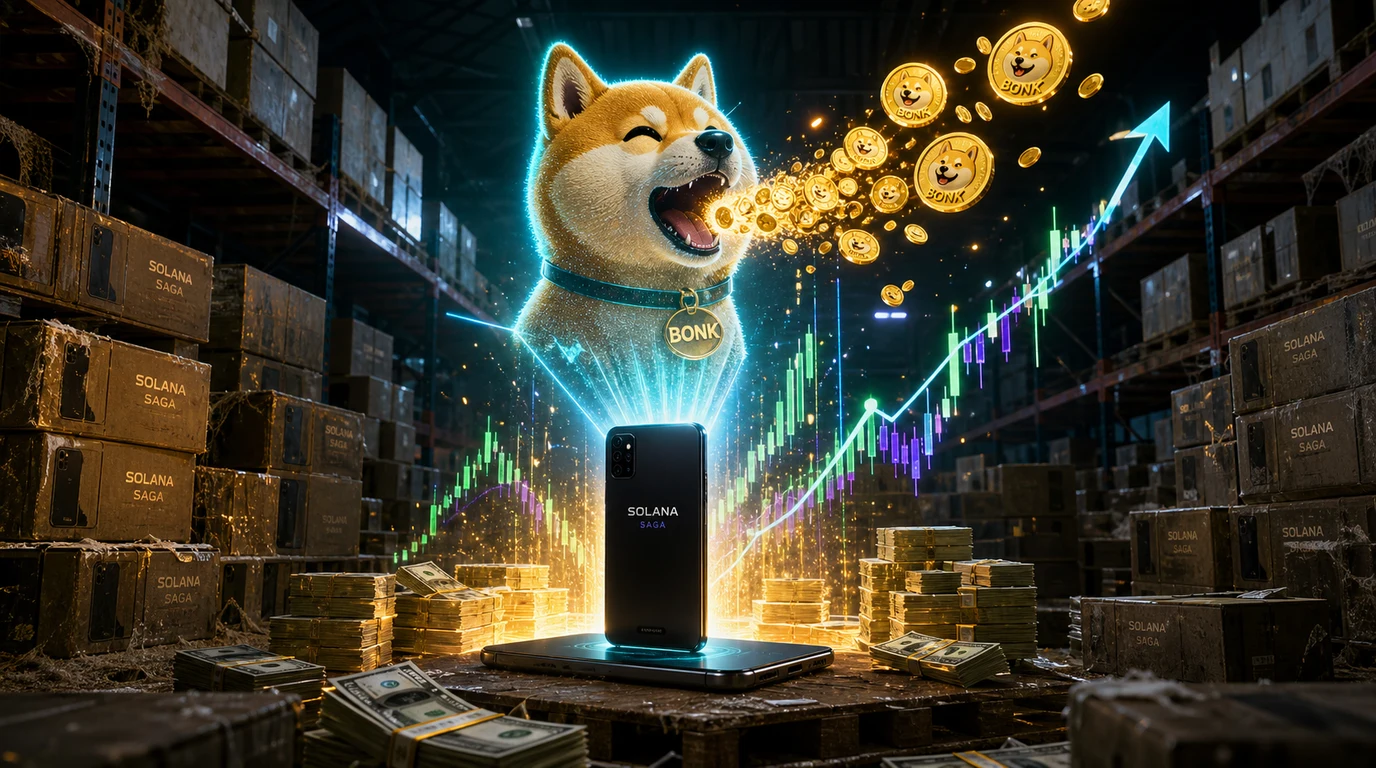
In December 2023, BONK rewards drew attention to the $599 Solana Saga. A token valuation helped change the sales story, but receiving a phone, claiming tokens and realizing proceeds remained separate steps.
Key Points
- Solana Mobile launched Saga in April 2023 and cut its price to $599 that August. A device-linked rewards program accompanied the hardware.
- By December, contemporary reporting valued the 30 million BONK claim above the handset price. That comparison described a market snapshot, not guaranteed cash profit.
- Solana Mobile announced a US sellout on December 15, while European stock remained. In September 2024, it revealed the successor Seeker after Chapter Two presales.
Chronological Timeline
Solana Mobile announces the availability of its crypto-focused Android device.
The company introduces the device-bound Saga genesis token and rewards program.
Solana Mobile announces a lower purchase price for Saga.
The company reports a US sellout while noting remaining European devices.
Solana Mobile reveals Seeker and reports more than 140,000 presales, ahead of a planned 2025 release.
1. A phone with two different price stories
On December 15, 2023, Solana Mobile announced that Saga had sold out in the United States. Its message still pointed European customers toward remaining stock. The contrast was striking: a handset that the company had marked down to $599 in August was now attracting buyers while its BONK reward drew attention. The sales result was real; the popular story of a phone dispensing guaranteed money was a different proposition.[6][2][5]
The product had arrived before that trading frenzy. Solana Mobile announced Saga’s availability on April 13, 2023, presenting an Android device designed around crypto use. On August 9, it announced the $599 price. The company needed to give prospective customers a reason to choose a dedicated handset. The lower price reduced the entry cost, but what an owner could actually do with the device remained part of that decision.[1][2]
A handset normally invites comparison with other handsets. A token reward introduces a second, moving comparison: what can its owner obtain outside the hardware? Saga brought those questions together. This is the useful economic interpretation of its reversal: the screen and the reward did not have to improve at the same time for the purchase to look more attractive. A change in the latter could reshape the appeal of the former.[2][5]
2. What the device actually unlocked
On April 17, Solana Mobile introduced the device-bound Saga genesis token as access to its rewards program. This was an identity mechanism linking a wallet and the Saga community, not a dollar balance stored inside the box. Helius’s January 2024 developer tutorial later showed how an application could check a connected wallet’s ownership of the Saga token before displaying gated content.[3][7]
The technical distinction matters. A developer can recognize an eligible wallet and decide what experience or offer to provide. That capability does not itself promise a transferable financial contract, a fixed redemption value or every future giveaway. The genesis token was infrastructure through which projects could reach owners; each offer still needed its own terms. Buying hardware and receiving a particular benefit were connected actions, not identical ones.[3][7]
Saga’s Seed Vault addressed another part of the experience: key custody and signing. Solana Mobile’s integration guide describes privileged environments separated from Android and ordinary applications, with wallet apps requesting signatures rather than receiving private keys. That design goal should be described on its own terms. It does not establish that every mobile interaction is safe, or that the phone has been proven equivalent to every desktop or offline wallet.[4]
3. A quotation is not a cash register
Decrypt’s December 15 report put the claim at 30 million BONK and its indicative value at about $865, above the $599 handset price. This was the arresting comparison at the heart of the story. It was also explicitly a contemporary valuation: a token amount multiplied by a moving market price, rather than a record of what each purchaser had received in money.[5]
There is a gap between ordering a physical phone and completing a token claim. There is another between holding tokens and selling them. A price observed while placing an order need not remain available at either later step. The simple comparison also leaves purchase-related costs and transaction costs outside the frame. Calling that difference instant profit would erase precisely the sequence a buyer still had to complete.[5][3]
The distinction does not make the incentive imaginary. A sufficiently valuable reward can change someone’s reason to buy. It changes the type of uncertainty they accept as well: a device purchase becomes exposed to the market value and availability of a separate benefit. Saga’s episode is interesting because those incentives became visible in hardware demand, not because token volatility somehow stopped at the checkout.[5]
4. A sellout with a geographical boundary
On December 14, Solana co-founder Raj Gokal reported that Saga sales had increased more than tenfold over the preceding 48 hours and predicted a sellout before the new year. His update captured the sudden change in momentum. It was a participant’s report of relative growth, not a disclosed count of all phones sold or a completed worldwide sellout.[9]
The next day brought a narrower, concrete result. Solana Mobile said the United States had sold out, while Europe still had some phones. For a US customer, the direct purchase route had closed; the European stock position was different. That distinction matters when a trading opportunity depends on being able to obtain the physical device in the first place.[6]
The stock announcement did not settle what happened after checkout. Delivery, activation and reward claims still described different stages, and customers could have bought for different reasons. Contemporary reporting linked the rush to BONK; the official update recorded the commercial result in one market. Neither supplied a ledger of each owner’s realized proceeds.[6][5]
5. The next phone faced the harder question
The next chapter had its own calendar. In its September 18, 2024 US press release, Solana Mobile revealed Seeker, previously introduced as Chapter Two, and reported more than 140,000 presales. Release was then planned for 2025. These were company-reported advance purchases, not evidence that those phones had already shipped or that buyers had already recovered their spending.[8]
The release described improved hardware, a new wallet experience and an updated app store. That combination suggests the lasting test: whether people would use the device after the excitement of a reward. A reservation count can show interest in a proposition, but it cannot answer how often those owners will open applications months later. That remains a different question from selling the next batch.[8]
Saga’s reversal therefore leaves a more demanding lesson than a tale of free electronics. Rewards can bring a product to someone’s attention; a usable product must give that person reasons to remain. The token and the handset met in one purchase, but their value came from different places. Keeping those two stories separate is what makes their brief collision worth remembering.[3][8]
Key Takeaways for Investors & Builders
Identity and custody solve different problems
The genesis token helped applications recognize owners; Seed Vault handled key custody and signing. Neither mechanism guaranteed a financial return.
Separate valuation from proceeds
A reward quoted above the handset price was an incentive snapshot. Delivery, eligibility, token prices and costs still stood between purchase and realized returns.
Acquisition is only the first test
A sellout or presale count measures demand at a moment. Continued use is a separate test of the product and its ecosystem.
Continue reading
Explore the topic through other cases and contexts.

Sources & References
- [1]Source 1: Saga availability announcementSolana Mobile · 2023-04-13
- [2]Source 2: Saga price reduction to $599Solana Mobile · 2023-08-09
- [3]Source 3: Introduction of the Saga genesis tokenSolana Mobile · 2023-04-17
- [4]Source 4: Seed Vault wallet integration guideSolana Mobile
- [5]Source 5: December 15 BONK valuation and Saga sales reportDecrypt · 2023-12-15
- [6]Source 6: US sellout announcement with European stock remainingSolana Mobile · 2023-12-15
- [7]Source 7: Developer tutorial: checking Saga genesis token ownershipHelius · 2024-01-22
- [8]Source 8: Seeker announcement and reported Chapter Two presalesSolana Mobile / PR Newswire · 2024-09-18
- [9]Source 9: Raj Gokal’s sales-growth report and year-end forecastRaj Gokal · 2023-12-14