Chainlink VRF: A Proof Needs an Answering Service
Chainlink schedules VRF v1 and v2 shutdowns for November 2026. The dates expose a distinction between verifying a random answer and keeping the service that delivers it.

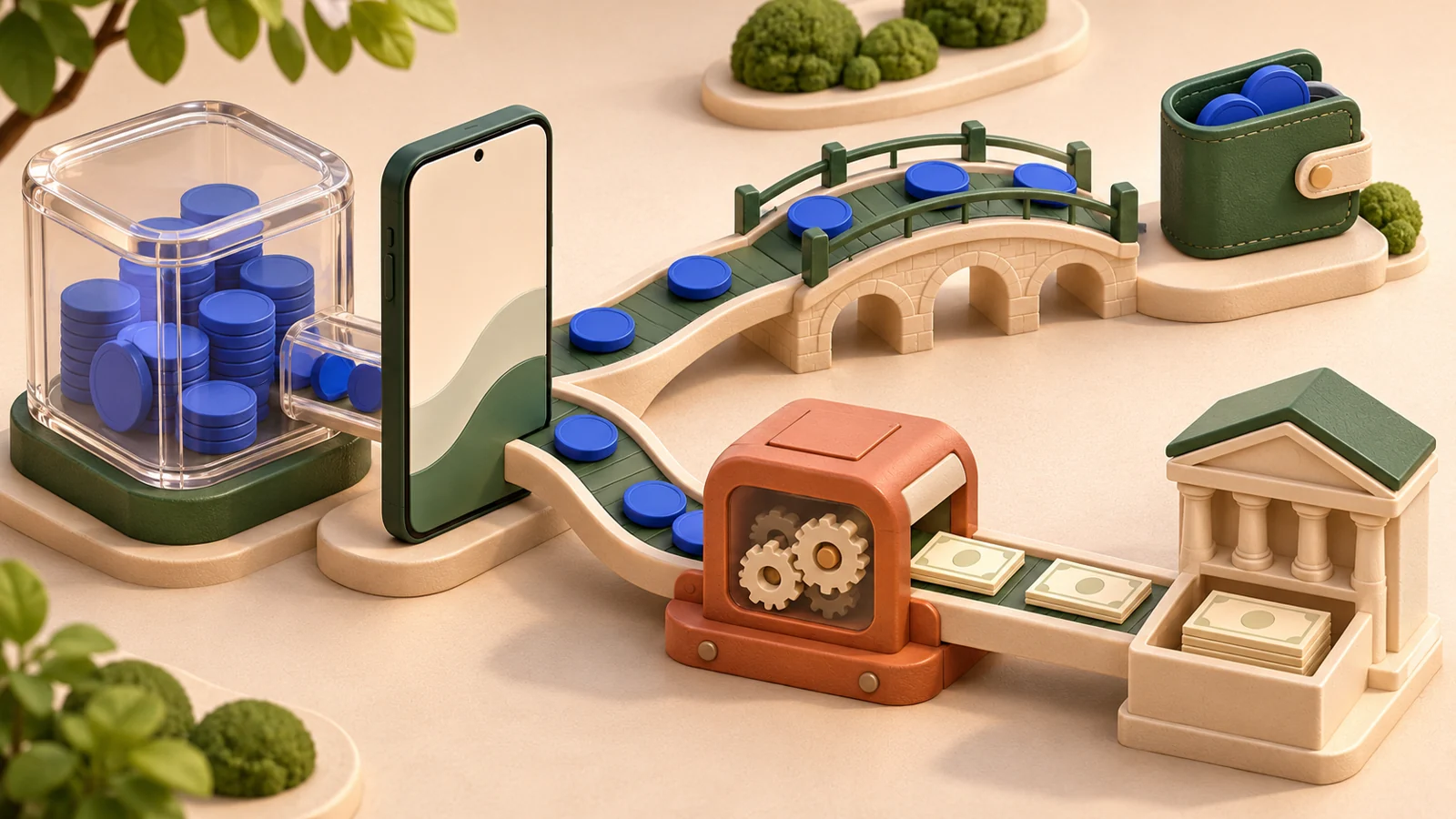
Concept illustration: verified records, an empty receiving tray and a service counter represent persistent history and an answering service. This is not an observed outage or a literal Chainlink system.
Key Points
- As checked on November 7, Chainlink schedules VRF v1 shutdown for November 18 and v2 for November 30, 2026. It says those versions will stop fulfilling randomness requests after their respective dates.
- The November 2024 deprecation and the listed October 28–30, 2026 v2 brownout are separate milestones. The elapsed brownout window does not make either permanent shutdown a completed event.
- VRF verifies delivered randomness; an application also depends on response delivery and callback handling. The v2.5 migration guides describe contract/interface work, not an automatic update to every old application.
Inside this story
Chronological Timeline
The documentation dates deprecation to November 29, 2024; it distinguishes this from the later permanent service shutdowns.
The notice lists a 48-hour brownout for October 28–30. That window has elapsed; this article does not independently verify its execution.
The current notice says VRF v1 will stop fulfilling randomness requests after this date.
The current notice gives VRF v2 a separate permanent shutdown date and points to migration to v2.5.
Two future dates, different from deprecation
A smart contract can depend on a service whose operating life is shorter than the contract’s recorded history. Chainlink’s VRF documentation makes that boundary concrete: as checked on November 7, 2026, VRF v1 is scheduled to shut down on November 18 and VRF v2 on November 30. The notice says those versions will no longer fulfill randomness requests after their respective dates. Both shutdowns are still future events at this check.[1][2][3]
Neither date should be confused with November 29, 2024, when the documentation says v1 and v2 were deprecated. The notice also lists a 48-hour v2 brownout on October 28–30, 2026. That scheduled window is now in the past; it is a temporary-interruption milestone, not the permanent cutoff. This article did not independently observe the brownout or test an old service endpoint.[1][3]
What a verifiable random answer proves
VRF means Verifiable Random Function. Chainlink describes a request producing random values with a cryptographic proof, which is published and checked onchain before the consuming application uses the values. The proof provides a way to verify a delivered result. It does not, by itself, cause the external service to keep generating and delivering future responses.[1]
Consider an application waiting for a random assignment. A recorded request and a valid response are different stages; the application’s next action may depend on the latter. The practical implication of the shutdown notice is therefore about continued fulfillment, not an assertion that old records disappear or earlier verified results become invalid. An onchain address or transaction history alone does not establish that its external dependency will answer the next request.[1][4]
Migration changes the consumer’s connection
The migration guides show why updating a version label is insufficient. From v1, the consumer’s request and callback interfaces change, including receipt of an array of random words instead of a single value. From v2, v2.5 introduces a structured request with extra arguments and changes subscription identifiers from 64-bit to 256-bit integers. These are interfaces between the application and the randomness service, not a migration of the LINK token.[2][3]
The v2 walkthrough calls for updated contract code and redeployment; subscription users create a new v2.5 subscription. Direct funding has its own wrapper changes. The new setCoordinator capability is described as a way to ease later coordinator upgrades, not as evidence that every previously deployed consumer automatically changes service. The guides explain a migration path; they do not establish which individual applications have completed it or how each handles outstanding requests.[3]
Delivery and application handling remain separate
The v2.5 security guide adds another boundary. Responses may arrive in a different order from requests, so they must be associated with the right request identifier. It warns against re-requesting or cancellation that lets someone discard an unfavorable result, and against accepting outcome-changing inputs after requesting randomness. It also says a reverting fulfillRandomWords callback will not be called a second time by the service. Receiving verifiable randomness and safely completing the application’s action are separate responsibilities.[4]
The useful reading questions are which VRF version and coordinator an application depends on, whether that service still fulfills requests, and how the application handles its response. The notice names retirement of specific VRF versions; it does not announce retirement of every Chainlink service. It gives calendar dates without an exact cutoff hour in the cited notice. This is an explanation of the published schedule and design boundaries, not a claim of current failure, a tested migration or a guarantee about any particular application.[1][2][3][4]
Continue reading
Explore the topic through other cases and contexts.


Sources & References
- [1]Source 1: Chainlink VRF — version shutdown notice and request modelChainlink DocumentationAccessed 2026-11-07
- [2]Source 2: Migrating from VRF v1Chainlink DocumentationAccessed 2026-11-07
- [3]Source 3: Migrating from VRF v2Chainlink DocumentationAccessed 2026-11-07
- [4]Source 4: VRF v2.5 Security ConsiderationsChainlink DocumentationAccessed 2026-11-07