The 5-Year Secret Inside Every Mac: The Mystery of Satoshi's Hidden Bitcoin Whitepaper in macOS
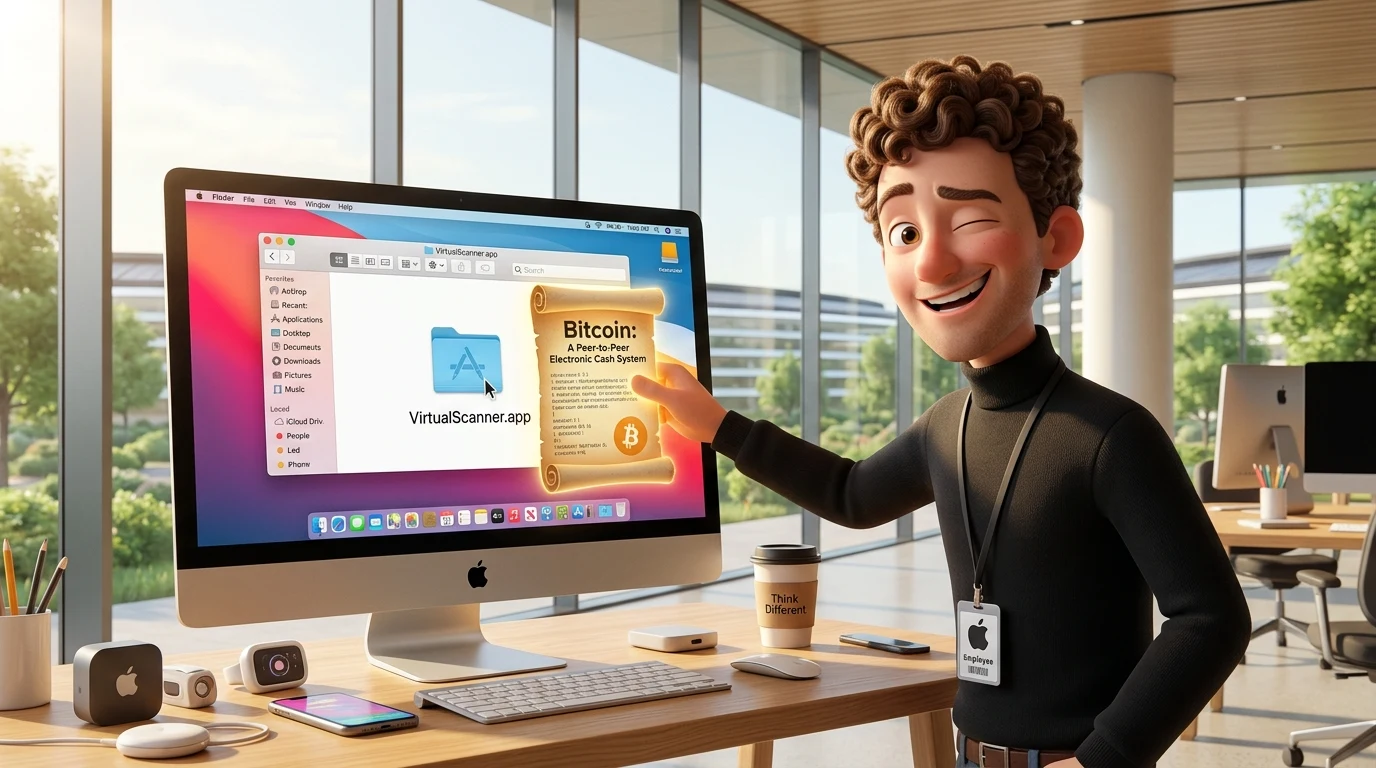
In April 2023, independent technologist Andy Baio discovered that every modern Apple Mac shipped since 2018 contained an astonishing secret: Satoshi Nakamoto's original 9-page Bitcoin whitepaper PDF was embedded deep inside macOS system files under a utility called VirtualScanner.app. How did the manifesto of decentralized peer-to-peer money end up pre-installed on hundreds of millions of corporate Apple computers, and why did it stay undiscovered for five years?
Key Points
- In April 2023, technologist Andy Baio revealed that Satoshi Nakamoto's 2008 Bitcoin whitepaper PDF had been secretly included inside Apple macOS since Mojave (2018).
- The 9-page manifesto was used as a sample document for a hidden internal testing utility called 'VirtualScanner.app' inside Image Capture components.
- The discovery ignited wild internet theories about Steve Jobs being Satoshi, rogue Bitcoin engineers at Cupertino, and prompted Apple to quietly remove the file in macOS 13.4.
Chronological Timeline
An anonymous Apple engineer embeds 'simpledoc.pdf' (Bitcoin Whitepaper) inside VirtualScanner.app.
A developer posts about the sample PDF on Apple Community forums, but goes completely unnoticed.
Waxy.org publishes the terminal command to open the PDF; global tech media goes into a frenzy.
Apple removes VirtualScanner.app and the Bitcoin PDF entirely in macOS Ventura 13.4 beta.
Insiders confirm it was a harmless, convenient test file chosen by a rogue Apple engineer.
1. The Terminal Command That Shook the Internet
On April 5, 2023, tech blogger and Kickstarter founding engineer Andy Baio published a seemingly innocuous blog post on Waxy.org titled 'The Bitcoin Whitepaper Is Hidden in Your Mac' [1].
Baio provided a simple one-line macOS Terminal command: open /System/Library/Image\ Capture/Devices/VirtualScanner.app/Contents/Resources/simpledoc.pdf. Within seconds, Mac users worldwide hit Enter—and watched in sheer disbelief as Satoshi Nakamoto's seminal 2008 whitepaper, 'Bitcoin: A Peer-to-Peer Electronic Cash System', popped onto their screens in crystal-clear vector PDF format [1].
I was trying to fix my printer when I stumbled on this. Of all the documents in the world, why was Satoshi's Bitcoin whitepaper chosen?[1][2]— Andy Baio (Waxy.org, April 2023)
2. Hidden in Plain Sight Across Millions of Devices
As digital forensics experts tore into the macOS file architecture, they confirmed the mind-boggling truth: the whitepaper had been residing on every single Apple Mac running macOS 10.14 Mojave through macOS 13.3 Ventura since September 2018 [2].
It was stored as the default test asset for VirtualScanner.app, an internal testing tool used by Apple engineers to simulate scanning documents without needing a physical hardware flatbed scanner [2].
Alongside the Bitcoin whitepaper was a high-resolution JPEG of a tropical signpost at Thomas Kramer's private beach in the Bay Islands of Honduras. The engineer who configured the tool clearly had a penchant for crypto and exotic destinations [3].
3. The Conspiracy Theories: Was Steve Jobs Satoshi?
The discovery ignited wild speculative chaos across Crypto Twitter and Silicon Valley. Tech enthusiasts joked about whether Steve Jobs had secretly authored Bitcoin before his death in 2011, or if Apple had a covert corporate balance-sheet allocation [3].
In reality, Apple has historically maintained an uneasy, restrictive stance toward crypto apps on the App Store. The inclusion of the whitepaper was not a corporate partnership, but the personal, subversive easter egg of a rogue Apple software engineer who needed a lightweight, multi-page PDF for scanner testing [4].
4. Apple's Silent Patch and the 184-Kilobyte Legacy
Just twenty days after Baio's blog post went viral worldwide, Apple pushed out the developer beta for macOS Ventura 13.4. Without a single word in the official changelog, VirtualScanner.app and Satoshi's whitepaper were completely scrubbed from the operating system [4].
Yet, the poetic irony remained indelible: for five full years, the foundational blueprint of decentralized, anti-establishment money had been pre-installed on the world's most premium consumer electronics hardware [4].
At just 184 kilobytes, Satoshi's vision proved that profound ideas are impossible to contain—even within the most tightly controlled corporate software walls in human history.
5. Evidence check: Apple never explained why
The file and its location in VirtualScanner are documented, as is its removal from the macOS 13.4 beta [4]. Apple did not publicly identify the engineer who chose the PDF or explain the choice. Claims that the person was a Bitcoin fan, that the beach image revealed their hobbies, or that Steve Jobs was Satoshi are speculation, not findings.
The safest conclusion is mundane: a test utility shipped with sample assets and the assets remained in production builds for years. The discovery is an unusual software-packaging story, not evidence that Apple endorsed Bitcoin or held a secret position on it [4].
Key Takeaways for Investors & Builders
The Ubiquity of Lightweight Cryptographic Specs
At only 184 kilobytes, Satoshi's 9-page whitepaper is one of the most mathematically dense, self-contained technical specifications in computer science history.
Subversive Easter Eggs in Closed Corporate Ecosystems
A single engineer secretly distributed the foundational blueprint of financial freedom across hundreds of millions of walled-garden Apple computers.
Cultural Significance of the 2008 Bitcoin Manifesto
The presence of the whitepaper inside Apple's OS demonstrated how deeply Bitcoin philosophy had permeated elite Silicon Valley engineering culture.
Continue reading
Explore the topic through other cases and contexts.