Unisocks: The Moment a Token Becomes a Pair of Socks
Uniswap’s 2019 merchandise experiment offered a peculiar choice: keep trading a token, or consume it to request real socks. The interesting part was the handoff from an exchange to a shipping address.

3-Minute Fast Briefing
- The ParadoxUniswap Labs launched Unisocks in May 2019; the original app described a pool seeded with 500 SOCKS tokens and ETH.
- The Turning PointEach token represented a claim to one pair. Buying and selling moved the pool price; redeeming used a separate burn flow.
- The LegacyThe redemption interface collected shipping details and displayed a delivery estimate. An onchain action still depended on offchain fulfillment.
Chronological Timeline
Uniswap Labs launches the experiment in merchandise priced through a token pool.
The official commit records the interface for shipping details, token redemption and order confirmation.
Merchandise without a fixed price tag
A pair of socks is usually the end of a purchase. In Uniswap Labs’ May 2019 experiment, it could remain a possibility instead. A buyer acquired SOCKS, a token representing the right to request a real pair. The holder could keep that claim, trade it, or redeem it. The merchandise had become something that could circulate before anybody decided to wear it.[1][2]
The original app explained that 500 SOCKS tokens were deposited into a Uniswap pool alongside ETH. Its price changed with purchases and sales, rather than staying at a shopkeeper’s fixed tag. A buyer could therefore acquire a claim from the pool without negotiating with a particular sock owner; a seller could return the token to that market. The quantity initially placed in the pool was not a promise that the same number would always remain available there.[2]
The distinction matters more than a spectacular quoted price. A price in a token pool describes an exchange under that pool’s conditions. It does not establish what the knitted object costs to manufacture, what every holder paid, or what every holder could receive by selling at once. The experiment let demand for the tradable claim interact with demand for the physical item. Those demands need not be identical.[2]
The order consumed the claim
On October 22, 2019, the official repository recorded its redemption launch. The interface asked holders how many SOCKS to redeem, then requested delivery details before the final order step. Its implementation called a burn operation for the selected quantity and waited for the transaction before showing the completion view. Buying a token and ordering a parcel were deliberately different flows.[3][4][5]
That order screen also distinguished the claim from a collectible. Alongside the physical socks, it advertised a bonus Unisocks NFT. The redeemable balance and the souvenir were not interchangeable objects: using the claim meant giving up those SOCKS tokens, while the interface offered a different digital collectible with the order. Describing everything simply as buying an NFT obscures that sequence.[4]
For the holder, redemption was a choice about what to keep. Leaving the claim unredeemed preserved the option to trade it or use it later. Redeeming committed the selected tokens to obtaining the physical product. The code made that choice visible as a change of state, not merely a new picture in a wallet. A pair that could be worn came with the loss of the same claim’s future use.[2][4]
A blockchain did not pack the box
The archived delivery form requested a name, postal address, country and email. It asked the wallet to sign a message containing the order details and submitted a web form; the burn transaction was a separate step in the redemption interface. After confirmation, the interface showed an estimated shipping time of two to three weeks, varying by region. That was the app’s estimate, not evidence that every parcel arrived on schedule.[4][5]
This is where the playful experiment becomes useful to think with. The chain could record the use of a token, but people and delivery services still had to supply the socks. An order confirmation was not a proof of receipt. Unisocks made a physical claim easy to trade, then exposed the ordinary work needed to fulfill it. The most revealing moment was not a price milestone. It was the decision to stop holding a possibility and ask somebody to send a pair of socks.[4][5]
Connected Stories in this Universe
Explore the chain reaction of historical breakthroughs, blunders, and legends.

Hayden Adams: From a Siemens Layoff to Uniswap
How a laid-off mechanical engineer learned to code, followed an on-chain market-maker idea, and brought Uniswap V1 to Ethereum.
Read story →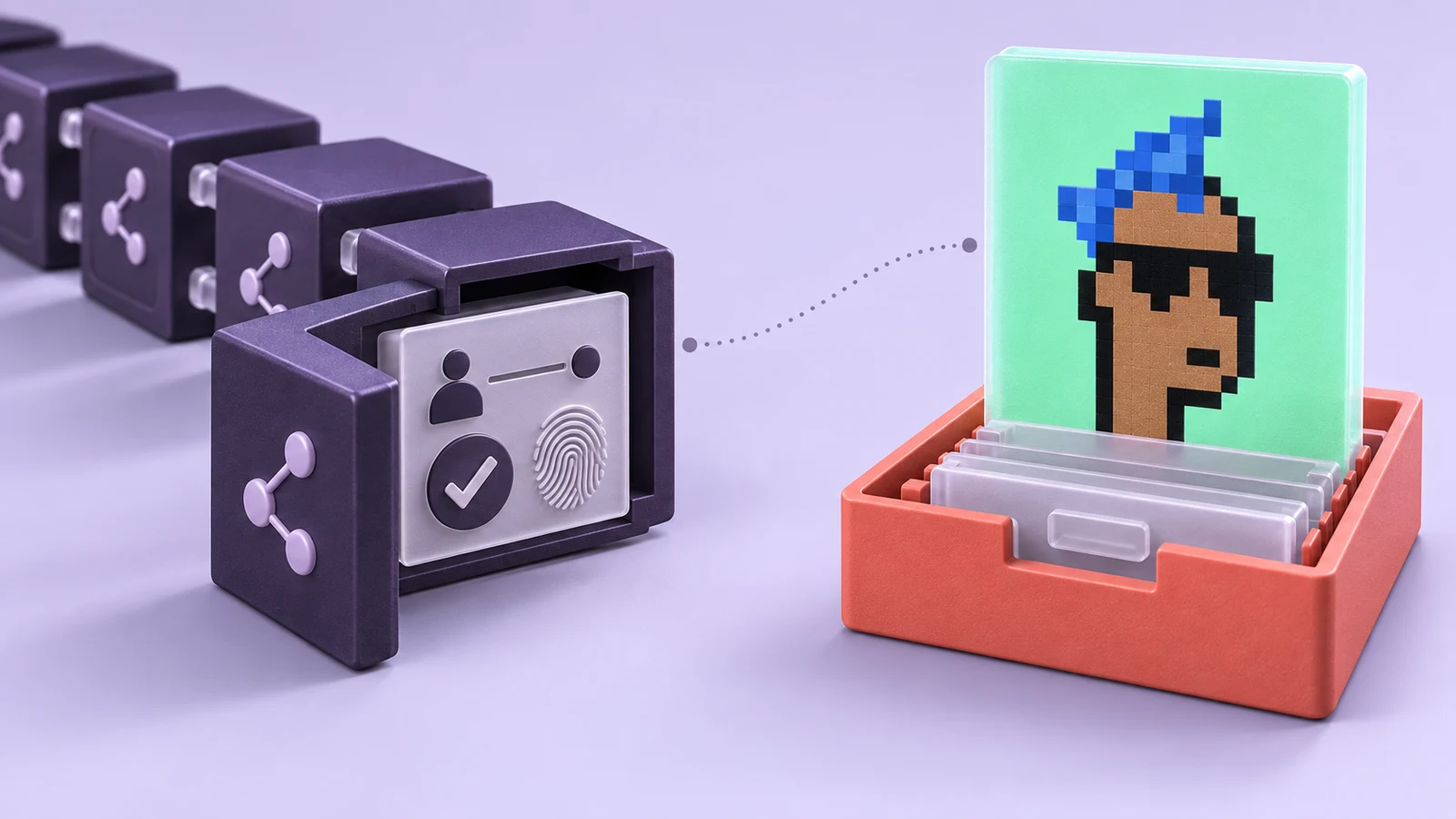
CryptoPunks: The Owner Was On-Chain. Where Was the Image?
A copied portrait did not change its owner. But recording ownership was only part of keeping CryptoPunks on Ethereum.
Read story →Sources & References
- [1]Source 1: Uniswap’s account of the May 2019 launchUniswap Labs / Uniswap Foundation · 2025-11-10Accessed 2026-09-19
- [2]Source 2: Original app: how SOCKS workedUniswap / GitHubAccessed 2026-09-19
- [3]Source 3: Redemption launch commitUniswap / GitHub · 2019-10-22Accessed 2026-09-19
- [4]Source 4: Original app: redemption and shipping statesUniswap / GitHubAccessed 2026-09-19
- [5]Source 5: Original app: delivery-address formUniswap / GitHubAccessed 2026-09-19