Surviving Hyperinflation: The Venezuelan Gamers Who Traded RuneScape Gold for Bitcoin and Food
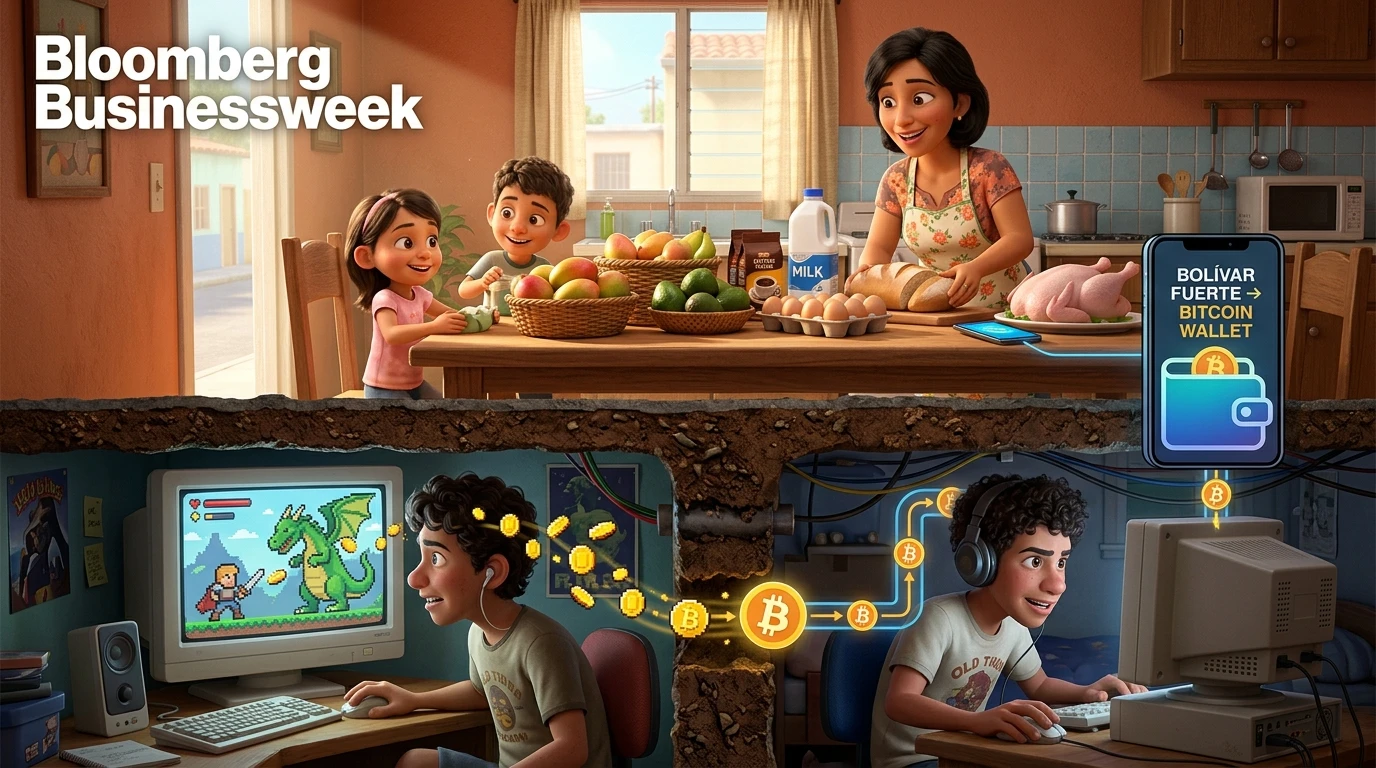
Between 2017 and 2019, Venezuela's economic collapse reduced monthly salaries for doctors and professors to less than $5 in worthless bolívars. Facing starvation and medical shortages, thousands of ordinary young people turned to a 2001 fantasy video game called RuneScape. By hunting virtual dragons 16 hours a day and selling the in-game gold for Bitcoin and USDT on peer-to-peer markets, they fed their families—triggering virtual turf wars and exposing the raw survival utility of borderless cryptocurrency.
Key Points
- During Venezuela's catastrophic hyperinflation, the monthly minimum wage plunged below $5, rendering traditional currency completely useless.
- Tens of thousands of citizens logged into the 2001 MMORPG RuneScape to farm virtual gold, converting it via P2P exchanges into Bitcoin and USDT.
- A single player could earn $50 to $100 monthly in crypto—ten times the salary of a local surgeon—transforming virtual gaming into a real-world humanitarian lifeline.
Chronological Timeline
The Venezuelan bolívar depreciates exponentially; basic food and medicine become unobtainable.
Young Venezuelans discover that selling in-game gold for Bitcoin pays vastly more than local jobs.
Tensions erupt inside RuneScape as international players hunt down Venezuelan farmers in PvP zones.
Massive electrical blackouts in Venezuela cause in-game gold prices to spike 30% globally.
The phenomenon becomes the foundational case study for Play-to-Earn economies and monetary resilience.
1. The $5 Monthly Wage and the Starvation Crisis
Between 2017 and 2019, Venezuela suffered one of the most catastrophic economic collapses in modern history [1]. Annual inflation soared past 1,000,000%, turning stacks of paper bolívars into literal trash swept along the streets of Caracas.
University professors, certified surgeons, and civil engineers found their monthly salaries reduced to less than $5 USD—barely enough to purchase a single carton of eggs or two kilograms of rice [2].
With bank ATMs restricted and store shelves empty, families faced a brutal daily choice: find foreign currency, or watch their children go to bed hungry. In the working-class barrios, an unexpected salvation arrived through flickering cathode-ray monitor screens [3].
2. Working the Shift in a 2001 Fantasy Realm
Young Venezuelans discovered that an ancient, low-spec browser game launched in 2001—Old School RuneScape (OSRS)—held the key to survival [1]. Because the game could run on obsolete Pentium computers and slow dial-up internet, internet cafes and bedrooms across Caracas transformed into makeshift digital factories.
Workers logged in for 12 to 16 hours a day, guiding digital avatars into dangerous virtual regions known as the Wilderness to hunt 'Green Dragons' and collect virtual gold coins [2].
My mother was crying because we had nothing to eat. I started playing RuneScape for 14 hours a night. By the end of the week, I had traded my virtual gold for $30 worth of Bitcoin. That was six months of my father's pension.— Carlos (22-year-old Venezuelan Gamer)
An average player could earn roughly 2 to 3 million gold coins per hour, translating to about $0.50 to $1.00 USD. In a country where the daily minimum wage was 15 cents, gaming was a goldmine [1].
Young workers packed into humid, rundown internet cafes across Caracas and Maracaibo. When municipal power grids failed, cafe owners fired up roaring diesel generators to keep the CRT monitors alive. Guiding level-70 combat avatars equipped with Dragon Scimitars and Anti-Dragon Shields, players dodged deadly player-killers in the Wilderness, clicking frantically to teleport back to the safety of Varrock bank [2].
3. The Bitcoin P2P Lifeline and Food Markets
Game developer Jagex strictly prohibited real-world trading (RWT), but survival trumped Terms of Service [2]. Venezuelan players coordinated across private Discord and WhatsApp channels, selling their virtual gold to brokers who paid in Bitcoin (BTC) or Tether (USDT).
Using peer-to-peer platforms like LocalBitcoins, players traded these satoshis for food deliveries, medicines, and infant formula, or cashed out through informal neighborhood money transmitters [3].
Cryptocurrency acted as an un-censorable, non-depreciating shield. While the Venezuelan bolívar lost half its purchasing power every week, Bitcoin preserved the value of their grueling digital labor [1].
The Bitcoin earned through these digital dragon hunts directly saved lives. When Venezuelan public hospitals ran completely out of insulin, asthma inhalers, and antibiotics, families used Bitcoin to wire funds across the border to Colombian smugglers in Cúcuta, purchasing life-saving pharmaceuticals that were physically nonexistent in Caracas [1].
4. Virtual Turf Wars and the Great Blackout
The influx of tens of thousands of desperate Venezuelan workers flooded the RuneScape economy, causing severe in-game inflation and sparking bitter social conflict with recreational Western players [2].
Some wealthy Western gamers formed armed clans specifically to hunt down and kill Venezuelan farmers in player-versus-player (PvP) zones, while others wrote Spanish survival guides to help the farmers navigate the game safely [1].
The profound link between the game and Venezuelan reality was laid bare in March 2019, when a catastrophic nationwide power outage plunged Venezuela into darkness for five days. Instantly, the global supply of RuneScape gold plummeted, causing in-game gold prices to spike over 30% on international markets [3].
5. When Digital Worlds Save Flesh-and-Blood Lives
The Venezuelan RuneScape phenomenon proved to the world that decentralized digital currencies are not merely speculative toys for Silicon Valley techies [1].
For an entire generation of Venezuelans trapped under totalitarian mismanagement and hyperinflation, permissionless cryptocurrencies provided the difference between starvation and survival [2].
Years before the term 'Play-to-Earn' entered the venture capital lexicon, ordinary young people in Caracas had already demonstrated the revolutionary truth of Web3: when code is global and money is sovereign, no dictator can stop human ingenuity from finding a way to live [3].
Key Takeaways for Investors & Builders
Cryptocurrency as a Humanitarian Lifeline
When sovereign state currencies collapse, permissionless decentralized money offers the only functional bridge for civilian survival.
The Interconnectedness of Virtual and Real Economies
Real-world electrical blackouts directly altered virtual in-game commodity prices, proving digital assets have tangible economic roots.
P2P Liquidity in Capital-Controlled Regimes
Decentralized peer-to-peer cryptocurrency escrow networks bypassed totalitarian financial surveillance and strict capital controls.
Continue reading
Explore the topic through other cases and contexts.
Sources & References
- [1]Source 1: Chainalysis Research: Latin America Cryptocurrency Adoption and Hyperinflation DynamicsChainalysis Inc. · 2024-10-09
- [2]Source 2: Economy of Venezuela & Hyperinflation CollapseWikimedia Foundation · 2023-11-12
- [3]Source 3: Old School RuneScape Player Economy & Virtual Labor MarketsWikimedia Foundation · 2024-02-14
- [4]Source 4: How Hyperinflation in Venezuela Led to Clan Warfare in Old School RuneScapeNPR / Planet Money · 2021-07-21