Building Blocks: What the Refugee-Camp Checkout Recorded
In 2017, refugees in Jordan used an eye scan to redeem food assistance recorded on Building Blocks. The story leads from a supermarket checkout to the separate tasks of identifying a person, recording an entitlement and coordinating aid.
3-Minute Fast Briefing
- The ParadoxWFP reported in June 2017 that 10,000 refugees in Azraq camp could buy food using entitlements recorded on Building Blocks.
- The Turning PointBiometric authentication and the assistance ledger do different jobs. WFP says its present system keeps names, birth dates and biometrics outside Building Blocks.
- The LegacyThe private network helps agencies coordinate assistance. A 2022 Bangladesh example used a QR code to access food and hygiene support together.
Chronological Timeline
The first successful field test takes place in Sindh, according to WFP.
WFP reports a Jordan pilot serving 10,000 refugees through recorded entitlements and eye-scan authentication.
WFP describes families in Dhaka accessing food and hygiene assistance at retailers with a QR code.
The Purchase Came First
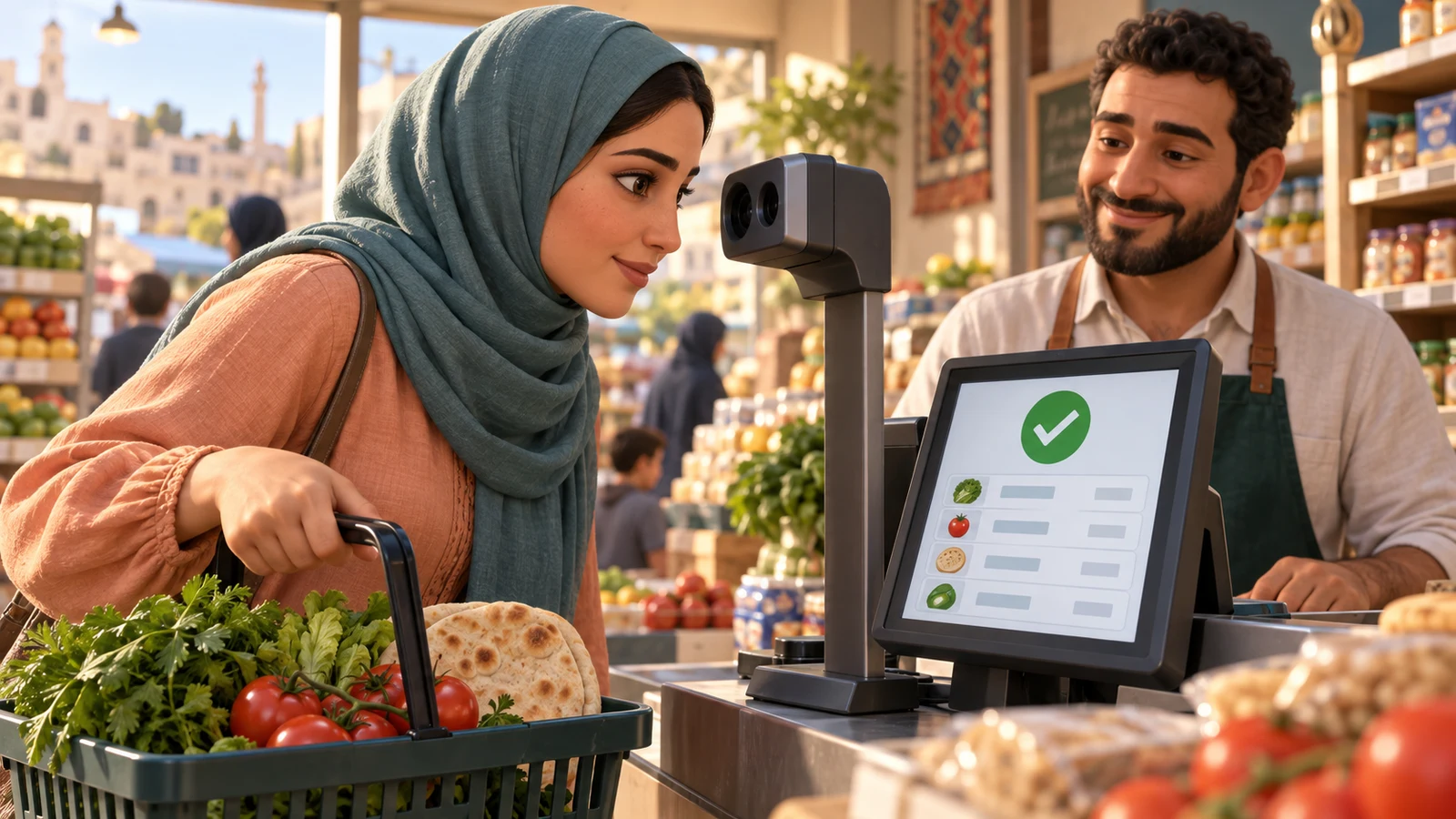
On June 1, 2017, the World Food Programme reported that 10,000 refugees in Jordan’s Azraq camp could pay for food through entitlements recorded on a blockchain platform. The project was called Building Blocks. At the supermarket, an eye scan authenticated the shopper. The account held assistance they could use for food: this was not a story about refugees trading cryptocurrency to afford groceries.[1]
WFP’s announcement separated two ingredients. Registration data came from UNHCR, the UN refugee agency, and biometric technology helped identify the person. Building Blocks recorded the assistance transactions. The scanner answered a question about access to an account; the ledger answered a question about the support allocated and used. Calling both “blockchain identity” hides that division of work.[1]
A Balance That Agencies Can Share
The UN Innovation Network offers a simple example: an agency allocates $50 of food assistance and the recipient spends $10 at a shop. Both events are recorded. Subtracting the purchase leaves $40 in this illustration, not a reported payment to a particular family. A shared record gives participating agencies a way to work from the same account history rather than reconcile isolated accounts later.[4]
The same account can coordinate different kinds of assistance from different organizations. That does not make every overlapping benefit an error. Food, hygiene products and other support can complement one another. The problem is unintended overlap under the participating agencies’ agreed programmes; the record helps them see it. The rules for what someone should receive still require institutional decisions.[2][3][4]
Ethereum Technology in a Different Setting
A February 2026 UN Innovation Network account describes Building Blocks as a private, permissioned, Ethereum-based network, originally using Parity/OpenEthereum. That is the relevant connection to Ethereum. Recording food entitlements on this network should not be confused with giving beneficiaries ETH or making them pay public Ethereum transaction fees. The report describes zero on-chain fees within Building Blocks.[4]
WFP describes the network’s nodes as servers run independently by participating organizations. Full members share ownership, operation and governance on an equal basis. The participants are aid organizations, not an unrestricted crowd of anonymous validators. The arrangement depends on those institutions agreeing to cooperate and maintain their shared system.[2][4]
The Eye Scan Was One Interface
The shopper’s biometric check does not mean an iris image must be written into the ledger. WFP’s project description, updated in April 2026, says names, dates of birth and biometrics are not stored anywhere on Building Blocks; it uses anonymous identifiers. That is the operator’s description of its design, not an independent audit of every connected registration system. Those surrounding systems still matter to how a person gains access.[1][2]
The interface also changed with the setting. In a December 2022 report from Dhaka, WFP described Dalia and other households collecting food support alongside hygiene and reproductive-health products provided by UNFPA. A QR code let them access the items at local retailers in one visit. The common feature was coordinated assistance, not a requirement to scan everyone’s eyes.[3]
What Remained Outside the Ledger
The Dhaka account also describes staff explaining which goods families could obtain and WFP assigning vouchers to accounts each month. Behind a convenient checkout stood programme staff, shops and an allocation of resources. A record could make those pieces work together; it could not put food on a shelf or decide, by itself, whose needs deserved priority.[3]
Building Blocks is useful to understand at that scale: one person, one purchase and several organizations trying to maintain a coherent account of their assistance. The experiment moved an important part of coordination into shared records. Its value at the checkout still depended on the institutions that funded, supplied and honoured the support those records represented.[1][2][3]
Connected Stories in this Universe
Explore the chain reaction of historical breakthroughs, blunders, and legends.

Gitcoin: What Changes When Small Donations Come from Many People?
Four people give $4 each. One person gives $16. The donations are equal; the matching signal is not.
Read story →
Facebook’s Libra: From Global Currency to an Asset Sale
A global currency for messaging apps became a dollar-based bank project. Before its launch, Diem sold the technology for cash and shares valued at $182 million.
Read story →Sources & References
- [1]Source 1: 2017 Azraq pilot: entitlements and biometric authenticationWFP Innovation · 2017-06-01Accessed 2026-09-16
- [2]Source 2: Project design: member-run nodes and data boundariesWFP InnovationAccessed 2026-09-16
- [3]Source 3: Dhaka: food and hygiene assistance through one QR codeWorld Food Programme · 2022-12-13Accessed 2026-09-16
- [4]Source 4: UN account: private Ethereum-based network and shared governanceUN Innovation Network · 2026-02-28Accessed 2026-09-16