I Test in Prod: The Exhausted DeFi Godfather, Yearn Finance, and the Madness of Degens
Andre Cronje launched YFI without a reserved founder allocation. His warning, “I test in prod,” became a badge of DeFi Summer—but he said it meant caution, not blind trust. The unfinished Eminence experiment showed what could happen when speculators treated accessible code as a finished product.

Key Points
- YFI’s initial 30,000-token distribution reserved no founder or venture-capital allocation. That did not mean Cronje could never earn YFI, or that the initial quantity was an immutable cap.
- In 2020 interviews, Cronje explained that “I test in prod” was a warning to examine risks. He distinguished limited code reviews from full security audits.
- The Defiant reported nearly 15 million DAI lost in the September 2020 Eminence exploit and 8 million DAI returned. A planned redistribution was not the same as an immediate full refund.
Chronological Timeline
30,000 YFI are distributed through liquidity mining without a reserved founder allocation.
A community announcement records a 6-of-9 multisig arrangement, a three-day governance handover delay and Cronje’s removal as a minter.
Cronje discusses contract risk, testing and the limits of audits in recorded interviews.
Contemporaneous reporting describes nearly 15 million DAI lost and 8 million DAI returned for redistribution.
The proposal later designated YIP-57 calls for 6,666 additional YFI to support contributors and the treasury.
1. The coder and the 0% founder allocation
Yearn began with a repetitive task. In his September 2020 interview with Laura Shin, Andre Cronje described comparing stablecoin lending rates and moving funds between providers. Transaction costs and the effort of doing this manually led him to automate the process. As liquidity pools and token incentives expanded the available strategies, the system also needed people who could understand and improve those strategies.[4]
YFI’s July distribution was intended to bring those participants into governance. The initial quantity was 30,000 tokens, earned through liquidity mining rather than reserved for a founder or venture-capital allocation. Cronje later explained that he could participate under the same rules as everyone else. No reserved allocation was therefore different from never owning a token, and earning rewards still required committing capital to the relevant pools.[1][4]
Authority changed as well as ownership. On July 21, Yearn’s community announcement described a 6-of-9 multisig controlling the governance arrangement and a three-day delay for changing the governance owner. It also stated that Cronje had removed himself as a minter. This was a specific transfer of powers, not a claim that every contract permission had disappeared or that the protocol had acquired legal immunity.[2]
2. The “valueless” token and the market
The market gave YFI a price despite the launch’s emphasis on its lack of financial value. SEBA Bank’s June 2021 research described a rise to roughly $43,000 within a couple of months of launch. The number captures the intensity of that period; it is neither a current quotation nor a claim that YFI was the first asset ever to exceed Bitcoin’s unit price.[6]
The initial 30,000 tokens also did not settle supply policy forever. Proposal 0 explicitly asked whether future issuance should remain possible. Later, the proposal designated YIP-57 sought additional tokens for contributors and the treasury. The scarce initial distribution and the community’s ability to revisit funding existed together, creating a governance question that a simple permanent-cap slogan would conceal.[1][7]
Asked in September why the price had risen, Cronje declined to offer a confident explanation. He said the attention had attracted skilled contributors and disputed reporting that portrayed his development expenses as an unresolved personal crisis. His account was that expenses had been recouped through protocol fees and that he could earn YFI using his own funds. The founder-with-no-gas-money legend leaves out that qualification.[4]
3. What “I test in prod” meant
The phrase “I test in prod” became the other half of the story. In an August interview, Cronje discussed the danger of a controller being able to redirect a vault’s strategy, especially without a delay. He wanted capable people to examine the contracts and stressed the possibility of losing funds. The warning concerned concrete powers and risks, rather than a promise that reputation could make experimental code safe.[3]
In September, he told Unchained that the phrase was meant to make users more cautious. When challenged about audits, he distinguished limited spot reviews from expensive, comprehensive examinations, and acknowledged the narrower reviews did not cover the full set of interactions between protocols. His explanation does not support the caricature of a developer who never tested anything; it also does not turn every experiment into an audited product.[4]
This tension was difficult to resolve with a profile slogan. A developer could call for scrutiny while users read public deployment as an invitation to participate. Contract access, testing, formal review and readiness were different stages. The interviews show Cronje wrestling with those stages; they do not establish a recurring pattern of $200 million arriving fifteen minutes after every deployment.[3][4]
4. Eminence and the 8 million DAI return
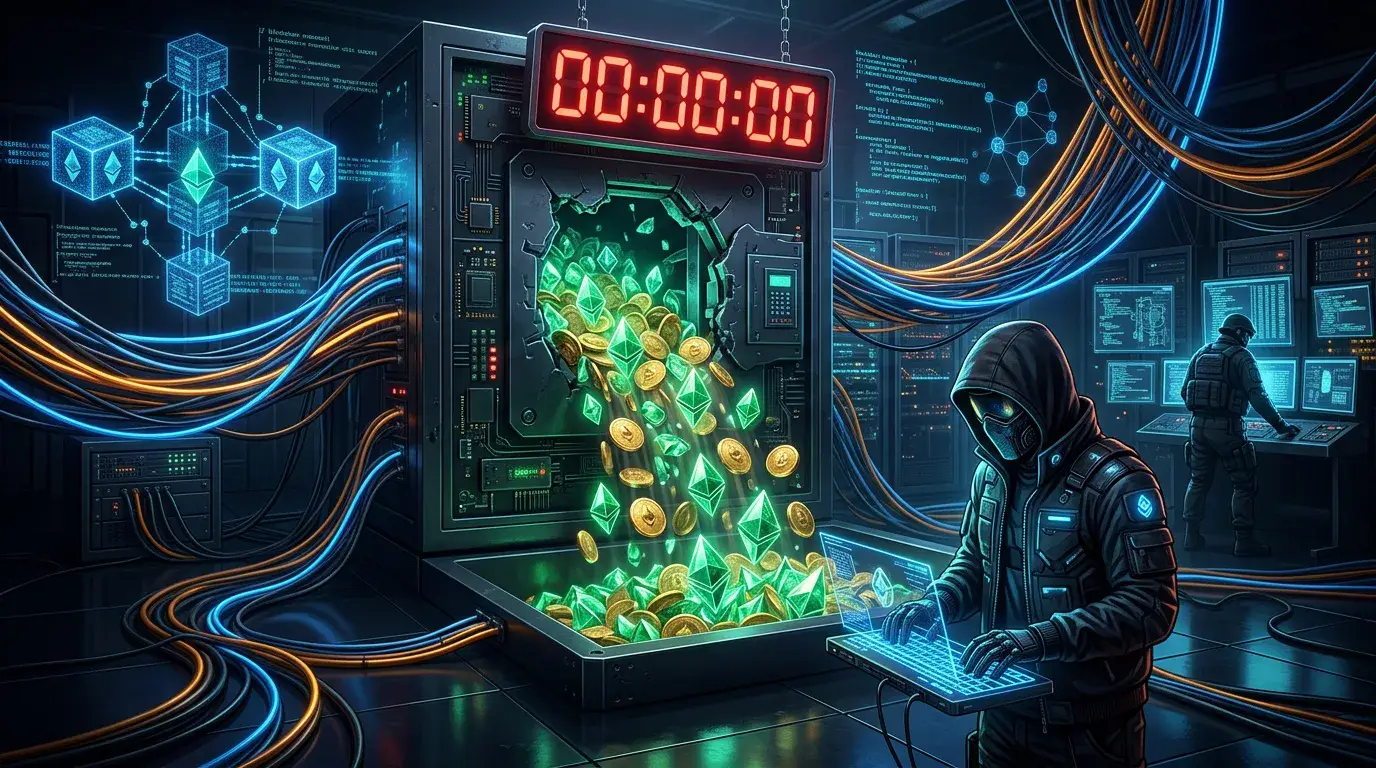
In late September, the distinction became costly at Eminence, an unfinished gaming experiment. The Defiant reported that tweets and Cronje’s retweets helped users find the contracts before an official launch announcement or public interface existed. Traders began depositing DAI to obtain EMN. The project’s association with a well-known developer gave an incomplete system an audience before its intended release.[5]
The Defiant’s account described a flash-loan attack exploiting the relationship between EMN issuance, burning and related tokens. Nearly 15 million DAI was drained. Its chronology placed the exploit less than three hours after the project went viral, not a separately verified ten-minute or fifteen-minute deposit window. Those distinctions matter when explaining how rapidly speculation overtook development.[5]
The same report recorded 8 million DAI returned and reproduced contributor banteg’s announcement that redistribution was being prepared from pre-attack balances. Returned funds and completed compensation are different milestones. The account does not substantiate the story of a “Good luck” message from the attacker, and it does not show that everyone was made whole. The return softened the loss without undoing the experiment’s failure.[5]
5. The person, the community and the work
Cronje’s frustration also predated Eminence. In the September 15 interview, he placed an earlier period of stepping away in February–March and rejected an account that he had planned to quit in August. That chronology cannot be retold as an October resignation caused by an attack that had not yet happened when the interview was recorded. His remarks nevertheless show a real conflict over responsibility between developers and users.[4]
For Yearn, continued work required more than a compelling founder story. The January 20, 2021 funding proposal called for 6,666 additional YFI, with roughly one-third intended for contributor retention and two-thirds for the treasury. SEBA’s June report described that issuance as completed. A community launch had created participation, but sustaining development still required decisions about resources and incentives.[7][6]
The lasting tension is between opening a system and treating that openness as assurance. YFI distributed governance participation; contracts and administrative powers still needed scrutiny. Eminence showed how a developer’s reputation could draw funds into an unfinished experiment. Cronje’s warning was memorable because it sat precisely at that boundary: the code was available, but availability was never the whole safety case.[2][3][5][7]
Key Takeaways for Investors & Builders
No reserved founder allocation
The initial distribution changed who could obtain governance tokens. Allocation design alone does not determine a token’s legal classification or confer regulatory immunity.
Automating the search for yield
Yearn pooled the work of selecting and executing strategies. Automation reduced manual steps while retaining contract, strategy and administration risks.
An accessible contract is not a finished product
Eminence attracted funds before a public interface or completed release. Finding code associated with a known developer was no substitute for understanding how it worked.
Continue reading
Explore the topic through other cases and contexts.

Sources & References
- [1]Source 1: Initial YFI supply and future-issuance proposalYearn · 2020-07-19
- [2]Source 2: July 2020 announcement transferring minting authorityYearn · 2020-07-21
- [3]Source 3: Cronje interview on governance and testing risksUncommon Core · 2020-08-21
- [4]Source 4: Cronje interview on Yearn, allocation and audit limitsUnchained · 2020-09-15
- [5]Source 5: Contemporaneous Eminence exploit and redistribution reportThe Defiant
- [6]Source 6: Yearn Finance research, June 2021SEBA Bank
- [7]Source 7: Proposal to fund contributors and the treasuryYearn · 2021-01-20