BIP39: The Words That Can Rebuild a Wallet
A broken device need not mean a lost wallet. BIP39 turned computer-generated randomness into an ordered list of words—but rebuilding the right wallet still depends on more than recognizing familiar vocabulary.

3-Minute Fast Briefing
- The ParadoxBIP39 encodes computer-generated randomness as words; it is not a recipe for inventing a memorable password.
- The Turning PointThe words produce a seed, from which a compatible wallet can derive a tree of keys.
- The LegacyAn extra passphrase changes the resulting wallet; a typo can open a different one without an error.
Chronological Timeline
Pieter Wuille’s BIP32 sets out hierarchical deterministic wallets.
BIP39 specifies a human-readable mnemonic and its conversion into a seed.
The device is replaceable; the starting point matters
Imagine replacing a broken wallet device. The replacement has never seen your transactions, yet an ordered word backup can let compatible software recreate the keys needed to access the same funds. It is not pulling coins out of the paper. The assets remain on the network; the backup restores the means of controlling them. This is an illustrative situation, not an account of a particular owner’s loss.[4]
That possibility rests on two different design jobs. Pieter Wuille’s BIP32, dated February 11, 2012, describes deriving a hierarchy of key pairs from one seed. Its motivation contrasts this with wallets that generated independent random keys and needed recurring backups. A common starting point made it possible to reproduce a growing key tree instead of preserving each new key separately.[2]
Why the words come after the randomness
BIP39, dated September 10, 2013, names Marek Palatinus, Pavol Rusnak, Aaron Voisine and Sean Bowe as authors. It addressed the human side of that starting point: copying words is more manageable than transcribing raw binary or hexadecimal data. The specification explicitly starts with computer-generated randomness. Choosing a favorite quotation or composing a sentence yourself is a different—and unintended—construction.[1]
For a twelve-word mnemonic, the process begins with 128 random bits and adds a four-bit checksum. The resulting 132 bits divide into twelve groups of eleven. Each group selects one entry from a 2,048-word list. Twenty-four words encode 256 random bits plus eight checksum bits; the standard also allows fifteen, eighteen and twenty-one words. Word order carries information. These are indexed pieces of an encoding, not a sentence whose general meaning is enough.[1]
The checksum gives software a way to reject some transcription mistakes, but it cannot catch every error or recover missing information for you. Nor can the words simply be translated into another language: BIP39’s seed calculation uses the mnemonic text itself. Changing that text changes the input, even if a human considers the translation equivalent.[1]
A second secret changes the destination
The mnemonic is not itself the final seed. BIP39 runs the words and an optional passphrase through a specified derivation function, producing a 512-bit seed. With no passphrase, the additional input is an empty string. A method such as BIP32 then uses the seed to derive keys. Keeping those stages separate explains why a word backup is neither one payment address nor a literal list of every private key.[1][2]
The optional passphrase is especially easy to misunderstand. It is an input to wallet creation, not merely a PIN that unlocks a device. A different passphrase produces a different valid seed. Trezor’s documentation makes the practical consequence clear: a mistyped passphrase can lead to another, usually empty wallet instead of a “wrong password” message. Restoring the intended wallet requires the original passphrase as well as the correct word backup.[3]
What survived the broken box
Rebuilding the same keys also requires compatible derivation rules and the right place in the key tree. BIP32 leaves room for different wallet layouts, so recognizing the words is not a universal promise that any application will find every account. And not every word backup is BIP39: Trezor documents SLIP39 as a separate format with its own recovery rules.[2][5]
BIP39’s lasting idea is a separation between a replaceable device and a reproducible cryptographic starting point. That makes the backup powerful, not harmless. Trezor treats it as secret information that can give access to the associated wallet. A small sheet can survive the box it came with; its usefulness depends on preserving the exact information, and keeping control of who can read it.[4]
Connected Stories in this Universe
Explore the chain reaction of historical breakthroughs, blunders, and legends.

Trezor: The Small Screen That Asks for Your Consent
Keeping a key safe does not decide where the money should go. That is why the little screen matters.
Read story →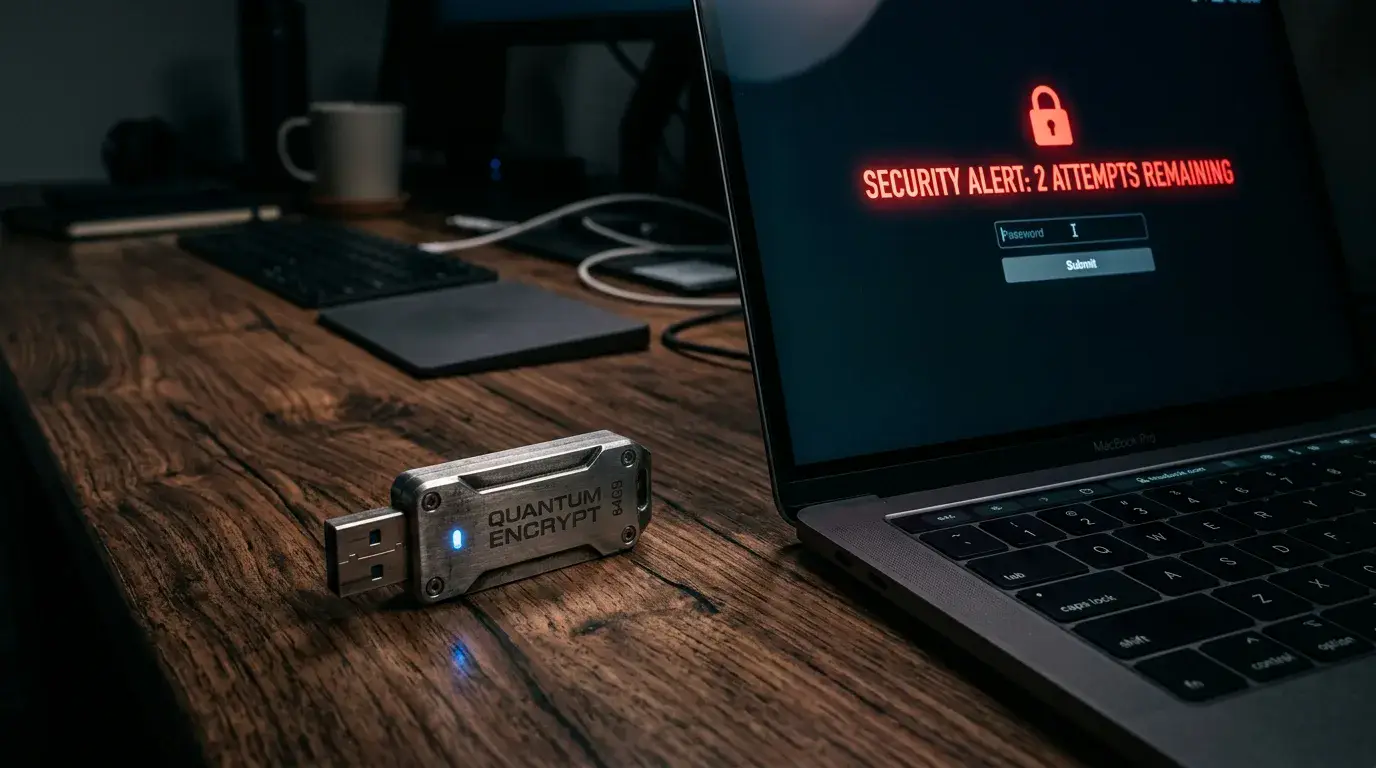
Two Guesses Left: The 7,002 Bitcoins Locked Inside an IronKey
Two password attempts remaining before hundreds of millions of dollars are permanently erased — the psychological torment of programmer Stefan Thomas.
Read story →Sources & References
- [1]Source 1: BIP39: authors, mnemonic encoding and seed derivationBitcoin BIPsAccessed 2026-09-23
- [2]Source 2: BIP32: hierarchical keys and wallet layoutsBitcoin BIPsAccessed 2026-09-23
- [3]Source 3: Passphrases: another input, another walletTrezorAccessed 2026-09-23
- [4]Source 4: What a wallet backup restores and why it is secretTrezorAccessed 2026-09-23
- [5]Source 5: BIP39 and SLIP39 are different backup formatsTrezorAccessed 2026-09-23