Two Guesses Left: The 7,002 Bitcoins Locked Inside an IronKey
German programmer Stefan Thomas received 7,002 BTC for making an early Bitcoin explainer video. Stored on a military-grade IronKey USB that self-destructs after 10 failed attempts, he has only 2 guesses left to access hundreds of millions.
3-Minute Fast Briefing
- The ParadoxIn 2011, German developer Stefan Thomas earned 7,002 BTC for creating an animated video titled 'What is Bitcoin?', storing the private keys on an encrypted IronKey USB drive.
- The Turning PointAfter losing the paper containing his passphrase, Thomas attempted eight common password combinations over the years—all of which failed, leaving only two attempts before the hardware permanently erases the data.
- The LegacyWith the wallet valued at over $400 million at market peaks, Thomas declined unverified hacker proposals, locking the device in a secure vault to preserve his mental health.
Chronological Timeline
Thomas produces an early animated Bitcoin explainer and receives 7,002 BTC from an early enthusiast as a reward.
During a relocation, the written passphrase for his IronKey USB drive is misplaced.
As Bitcoin rallies to $20,000, Thomas attempts eight passwords, leaving just two attempts before cryptographic wipeout.
Declining invasive hardware extraction offers, Thomas locks the IronKey away, focusing on his established career.
1. An Explainer Video and a 7,002 Bitcoins Tip
In early 2011, Stefan Thomas, a talented German-born software engineer living in Switzerland, became fascinated by Bitcoin's decentralized potential. To help onboard non-technical users, Thomas wrote, animated, and narrated a charming one-minute YouTube video titled 'What is Bitcoin?'.
The video gained traction in the early cypherpunk community. An appreciative early Bitcoin adopter sent Thomas a generous payment of 7,002 BTC. At the time, with Bitcoin trading around $1, the sum was worth roughly $7,000.
Eager to secure his digital assets, Thomas loaded the wallet's private keys onto an IronKey—a rugged, military-grade USB drive designed to withstand extreme physical tampering and brute-force attacks.
"The IronKey gives users ten password attempts before its internal cryptographic chip irreversibly erases all stored data. I wrote the password down on a slip of paper and placed it somewhere in my room."
2. The Misplaced Note and Eight Agonizing Red Errors
Thomas soon moved to San Francisco to pursue career opportunities, eventually becoming Chief Technology Officer of Ripple. Over years of cross-continental moves and career milestones, the small piece of paper vanished.
When Bitcoin reached $1,000 in 2013 and surged to $20,000 in 2017, Thomas retrieved the IronKey from his desk drawer. Sitting before his laptop, he attempted his most frequently used password combinations.
Attempt 1: Failed. Attempt 2: Failed. Attempt 3: Failed.
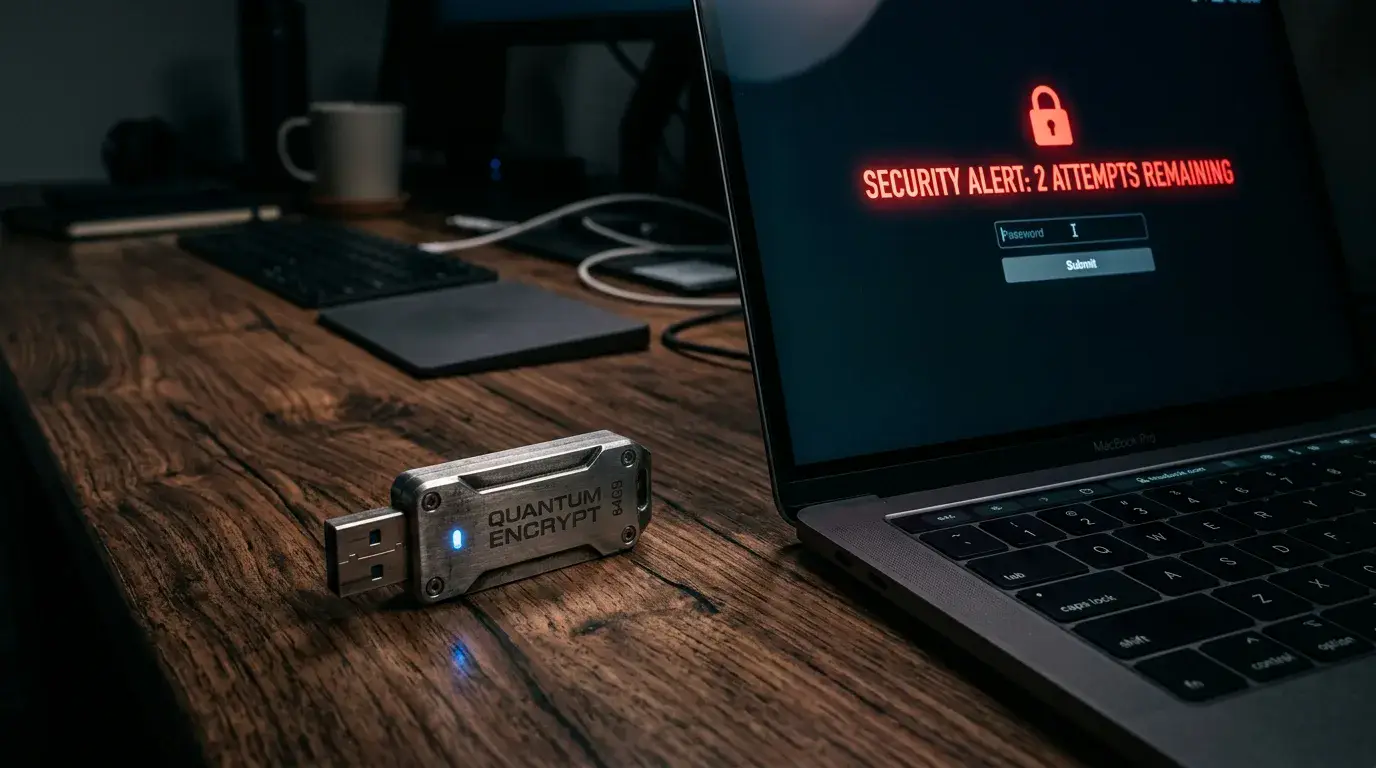
"INCORRECT PASSWORD. 2 ATTEMPTS REMAINING."
By the eighth failed attempt, a cold wave of dread washed over him. Two more incorrect guesses would trigger the IronKey's hardware kill-switch, permanently destroying the cryptographic keys to 7,002 Bitcoins.
3. The Psychological Burden of $400 Million
By 2021, as Bitcoin surged past $60,000, the 7,002 Bitcoins trapped inside the small metal USB drive were worth over $420 million.
In an emotional interview with The New York Times, Thomas detailed the intense psychological toll of being an arms-length away from generational wealth he could not touch.
"I'd just lie in bed and think about it. Then I'd go to the computer with some new strategy, and it wouldn't work, and I'd be desperate again. You start questioning your own worth as a human being."
The story went viral globally, prompting thousands of unsolicited emails from psychics, hypnosis practitioners, and cybersecurity researchers promising miracles.
4. Declining the Hackers and Sealing the Vault
In 2023, high-tech hardware recovery firm Unciphered announced it had developed a proprietary technique capable of bypassing the IronKey's attempt counter by decapping the chip and reading memory cells via electron microscope.
However, Thomas politely declined their public offer. Having already engaged other specialized cryptographic researchers under non-disclosure agreements, he was unwilling to risk irreversible physical damage to the sole existing hardware chip.
"Keeping that drive visible was destroying my life. So I placed it in a secure, climate-controlled vault and decided not to look at it. If technology advances to the point of 100% safety in twenty years, great. If not, my life is already full."
Having built substantial personal wealth through his legitimate software career, Thomas chose psychological peace over obsessive despair.
5. The Unforgiving Beauty of Cryptographic Sovereignty
Stefan Thomas's story highlights the uncompromising philosophy of decentralized blockchain networks.
In traditional banking, identity verification protocols allow centralized administrators to reset passwords or reassign ownership. But on the Bitcoin network, mathematical cryptography knows no mercy and recognizes no tearful appeals.
"We wanted a financial system without banks. But when you remove the bank, you must become the bank—and becoming the bank means accepting absolute, irreversible responsibility."
The IronKey resting silently in Thomas's vault stands as a timeless monument to the dual nature of digital sovereignty: supreme freedom paired with absolute accountability.
Key Takeaways for Investors & Builders
The Paradox of Hardware Security
Tamper-proof hardware that self-destructs after failed attempts protects against thieves, but becomes an unforgiving trap when human memory falters.
Psychological Acceptance and Detachment
Thomas's ability to compartmentalize the inaccessible fortune provides a case study in maintaining mental equilibrium amidst astronomical phantom wealth.
Adoption of Standardized Seed Backups (BIP-39)
This high-profile incident accelerated the industry-wide adoption of 12-to-24-word mnemonic seed phrases backed by metal storage plates.
Continue reading
Explore the topic through other cases and contexts.

Sources & References
- [1]Source 1: Stefan Thomas: Early Bitcoin Developer & BitcoinJS Library Architect RepositoryBitcoinJS Core Contributors · 2021-02-01
- [2]Source 2: IronKey: Hardware Cryptographic Security Architecture & Flash StorageWikimedia Foundation · 2023-08-20
- [3]Source 3: History of Bitcoin: Private Key Custody and Lost WealthWikimedia Foundation · 2024-01-18
- [4]Source 4: Man Has Two Guesses to Unlock Bitcoin Worth $240mBBC News · 2021-01-13